8 Results for "

Amygdalus persica L.

" in MedChemExpress (MCE) Product Catalog:
Products (8)

8 Results for "Amygdalus persica L." in MCE Product Catalog:

Cat. No.: HY-N6005
CAS No.: 3843-74-1
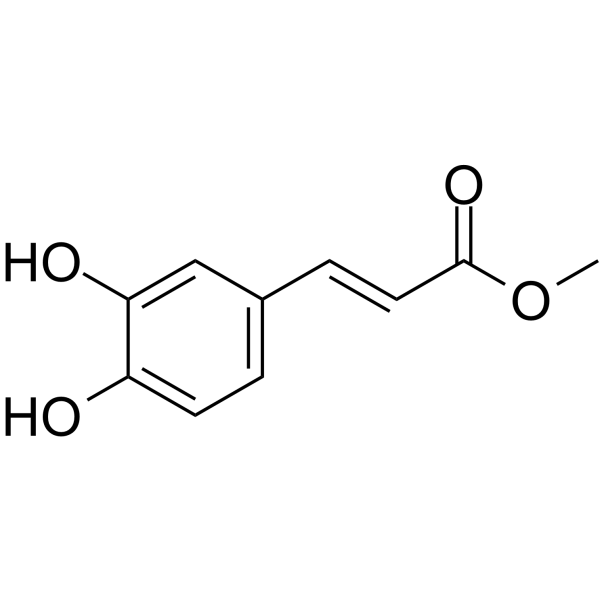
Methyl caffeate is a phenylpropanoid, antibacterial agent, and Apoptosis-inducing agent. Methyl caffeate can be isolated from the flowers of peach Prunus persica (L.). Methyl caffeate upregulates the expression of pro-apoptotic proteins Bid, Bax and p53, and downregulates the expression of anti-apoptotic protein BCL-2. Methyl caffeate downregulates SASP factors. Methyl caffeate enhances glucose-stimulated insulin secretion. Methyl caffeate inhibits the growth of Gram-positive bacteria, Gram-negative bacteria, fungi, and Mycobacterium tuberculosis strains. Methyl caffeate can be used in studies related to breast cancer, type 2 diabetes, and tuberculosis .
Cat. No.: HY-W010253
CAS No.: 538-32-9
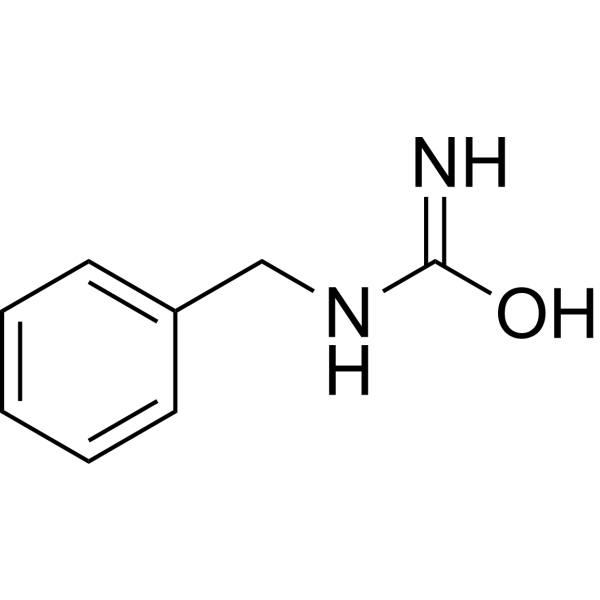
Benzylurea is an anti-inflammatory agent. Benzylurea inhibits LPS (HY-D1056)-induced upregulation of MTCH2 expression and regulates pathways associated with mitochondrial function, inflammation and cell survival. Benzylurea alleviates LPS-induced proliferation inhibition and apoptosis of periodontal ligament fibroblasts, as well as the release of proinflammatory cytokines. Benzylurea can be used in studies related to periodontitis .
Cat. No.: HY-N3091
CAS No.: 28978-03-2
Persiconin is a tyrosinase Inhibitor. Persiconin can be isolated from Prunus persica. Persiconin has tyrosinase inhibitory activity of 46% at 500 μM. Persiconin can be used in whitening research .
Cat. No.: HY-N12978
CAS No.: 56775-64-5
Benzyl β-gentiobioside is a phenyl alcohol glycoside found in peach kernels (Prunus persica seeds). Benzyl β-gentiobioside has anti-tumor promoting activity by inhibiting TPA (12-O-tetradecanoylphorbol 13-acetate, a tumor promoter)-induced Epstein-Barr virus early antigen (EBV-EA) activation .
Cat. No.: HY-W010253R
CAS No.: 538-32-9
Benzylurea (Standard) is the analytical standard of Benzylurea (HY-W010253). This product is intended for research and analytical applications. Benzylurea is a benzylamide. Benzylurea is an anti-inflammatory agent. Benzylurea inhibits LPS (HY-D1056)-induced upregulation of MTCH2 expression and regulates pathways associated with mitochondrial function, inflammation and cell survival. Benzylurea alleviates LPS-induced proliferation inhibition and apoptosis of periodontal ligament fibroblasts, as well as the release of proinflammatory cytokines. Benzylurea can be used in studies related to periodontitis.
Cat. No.: HY-N17716
CAS No.: 114219-00-0
Synonyms: 4'-O-β-D-Glucosyl-7-methoxy-eriodictiol
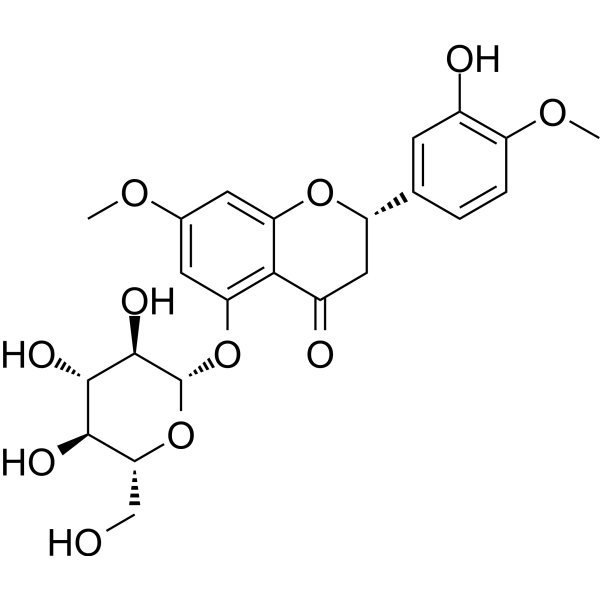
4'-O-β-D-Glucosyl-5,3'-dihydroxy-7-methoxyflavanone (Compound 3) (4'-O-β-D-Glucosyl-7-methoxy-eriodictiol) is a flavonoid. 4'-O-β-D-Glucosyl-5,3'-dihydroxy-7-methoxyflavanone can be isolated from the plant Aerva persica.
Cat. No.: HY-L223
853 compounds

Antitussive and antiasthmatic method is a type of treatment strategy in traditional Chinese medicine, mainly used to alleviate symptoms such as coughing and asthma. These symptoms may be caused by various factors, such as: Bronchial asthma, chronic obstructive pulmonary disease, asthmatic bronchitis, cough-induced asthma, and others. Based on existing research in traditional Chinese medicine, many types of Chinese medicinal herbs showed antitussive and antiasthmatic effects. For example: Ardisiae Japonicae Herba, Ginkgo Semen, Amygdalus Communis Vas, Farfarae Flos, Viticis Cannabifoliae Fructus, Eriobotryae Folium etc. Therefore, the active ingredients derived from these traditional Chinese medicine have high medicinal value and have the potential to be developed into drugs for related diseases.

MCE can provide 853 active ingredients that can be obtained from traditional Chinese medicine with antitussive and antiasthmatic functions, which can be applied to drug development and research on disease mechanisms.

Cat. No.: HY-N18106
CAS No.: 66427-92-7
Amygdalinic acid (Compound 3) is a glycoside. Amygdalinic acid can be isolated from Persicae Semen. Amygdalinic acid inhibits Epstein-Barr virus early antigen activation. Amygdalinic acid delays two-stage chemical carcinogenesis in mouse skin, reduces papilloma incidence .

